
Ep. 28: ChatGPT Introduces Ads and a New Tier
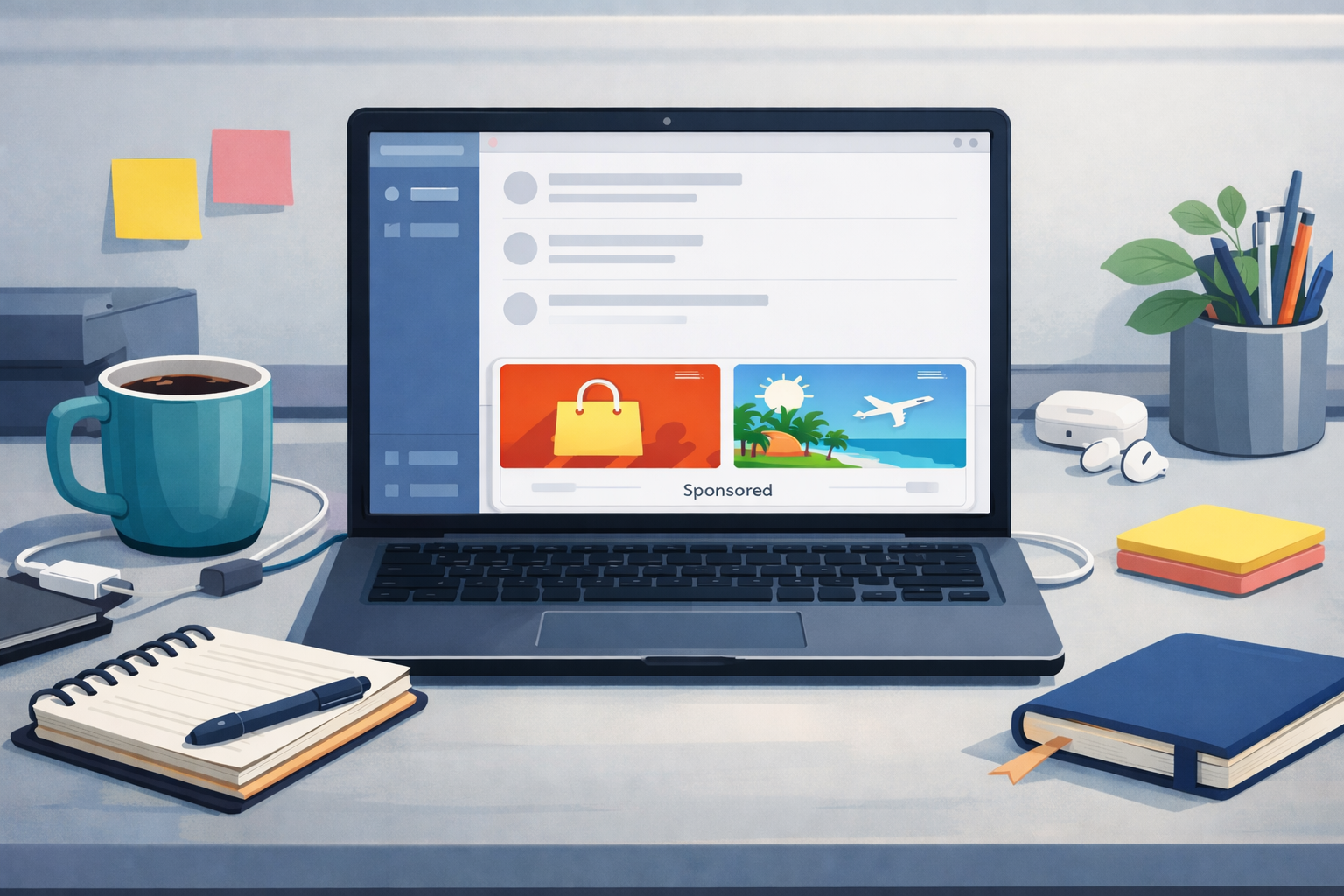
In this episode I dig into OpenAI’s quiet announcement that ads are coming to ChatGPT, alongside the U.S. rollout of the Go tier. I talk through what the ads might look like, who’s going to see them, and why this move feels less surprising than revealing. We get into the money math behind “free” tools, the trust implications of sponsored answers, and what this could mean for access as AI gets carved up into tiers.
Where OpenAI Chose to Announce This
We all knew this was coming. It was only a matter of time, and that time has officially arrived. On January 16th, OpenAI announced that it is rolling out ads.
Funnily enough, and honestly very on brand, this announcement did not show up in the release notes.
Instead, it lived on the OpenAI website under the News tab. I’ve since made a mental note that if I actually want to stay in the know, I probably need to be checking there instead of relying solely on release notes.
How the Ads Will Actually Work
OpenAI plans to start testing ads in the coming weeks for logged-in adults in the U.S. on the Free and Go tiers. If you’re on Plus or Pro, you’re safe.
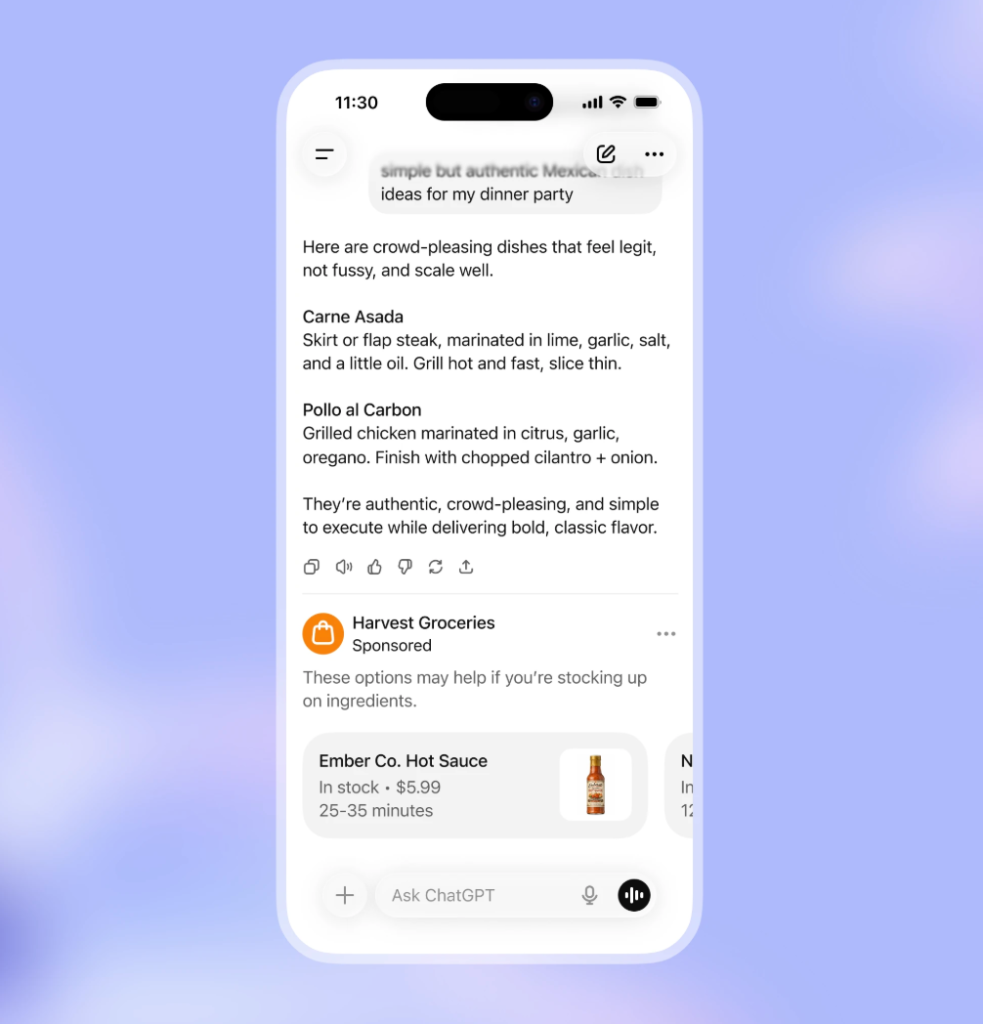
At least initially, ads will appear at the bottom of answers when there’s a relevant sponsored product or service tied to the current conversation. Ads will be clearly labeled and visually separated from the organic answer.
You’ll also be able to learn why you’re seeing an ad, or dismiss it and share feedback about why you don’t want to see it.
During the test phase, OpenAI says they will not show ads to users who are under 18, and ads are not eligible to appear near sensitive or regulated topics like health, mental health, or politics.
Here’s an example of what the first ad formats they plan to test could look like:
Who’s Paying to Be in Front of You
Short answer: unclear.
The only concrete detail I could find regarding who these advertisers will be, is that OpenAI has reached out to a small pool of advertisers and asked for spending commitments of less than $1 million over a several-week period. Beyond that, nada..
A Noticeable Shift in OpenAI’s Tone
This move represents a pretty clear sentiment reversal from OpenAI, even though most of us assumed ads were inevitable.
Back in May 2024, at an event at Harvard University, Sam Altman described ads as “a last resort” and said that “ads plus AI is sort of uniquely unsettling.”
Fast-forward to now, and here we are. Predictable, but still frustrating.
Free Was the Funnel
As previously noted, the people who will actually be impacted by this rollout are users on the Free tier and users on ChatGPT Go.
ChatGPT Go has been around since August 2025 and is currently available in 171 countries, with the U.S. becoming the most recent addition on January 16th. I’ve talked about this tier in previous episodes, and like I said then, it was only a matter of time before they rolled it out here.
Introducing this tier is a classic pricing and marketing strategy, and we’ve seen it a million times before,, most notably with streaming services like Netflix.
Obviously, the play here is money. Money from ads, and money from converting more users into paying customers.
It’s estimated that only about 4–5% of ChatGPT’s roughly 800 million weekly users currently pay. We have discussed these numbers before and we all know that this model was never sustainable.
Sustainability wasn’t the point.
Operating at a significant loss was intentional. The goal, as we’ve seen so many times with these corporations, was to create buy-in and dependency, then monetize later through pricing changes, ads, or enterprise lock-in. It’s straight out of Uber’s playbook.
Uber lost billions annually while keeping fares artificially low to build habit and market dominance. Once the subsidies were cut, prices jumped 25–40% or more.
How OpenAI Is Explaining This Publicly
Here’s how OpenAI has framed the decision:
“We’re planning to start testing ads in the U.S. for the Free and Go tiers so more people can benefit from our tools with fewer usage limits or without having to pay.”
The smooth talkers have positioned it as expanding access and part of a communal push toward AGI (artificial general intelligence).
Insert massive eye roll.
They need money, and ads are the easiest way to get it.
My Two Biggest Concerns
My top two concerns with the rolling out of these ads are as follows:
- Decreased trust
- The “de-democratization” of this incredible tech
I use ChatGPT for information. Sponsored answers complicate that relationship, even when they’re labeled.
Regarding what I’m calling “de-democratization”, one of my long-standing concerns has been that only people who can afford this potentially life-changing technology will have access to it.
I fully expect continued stripping down or unbundling of the lower tiers, with the goal of nudging users toward paid plans. Because, well, that’s how these companies do things. I’m only speculating, but that could look like lower usage limits and more restricted model access over time, and one can only hope that those lower tiers still remain viable options.
Will People Actually Leave ChatGPT?
Who knows.
Some of this comes down to what I talked about in episode 17, Will ChatGPT Get Old Navy’d?, but to summarize that episode: The experience has to get bad enough, or the price has to go up enough, that people are willing to tolerate the friction of leaving.
Casual users who never paid and never relied heavily on memory probably won’t feel much friction at all. On the flip side, it seems inevitable that ads will show up on most LLMs, just like ads eventually showed up on nearly every streaming platform (FYI – AppleTV is the only one with no ad-supported tier).
ChatGPT is just going first.
How I Used ChatGPT This Week
Each episode, I share a quick example of how I used ChatGPT that week.
This week I had Chat turn screenshots of a PDF into a Word document. I wanted to read a short four-page article about economic principles, but the only way to download it was by entering my email address, which was an immediate no.
So I took some screenshots and asked Chat to turn them into a .docx file with the exact transcription. It took a few minutes, but it worked like a charm.
Da Wrap-up
We knew ads were coming, they’re here, and now I suppose we wait and see what exactly they mean for the user experience. Fingers crossed it doesn’t all go to shit.
As always, endlessly appreciative for you and your curiosity.